
Grant County 72-Hour Release Gap
The official Grant County sitemap, sheriff pages, and site navigation did not reveal a 72-hour release page. The separate search for a 24-hour view also came up empty. This is not a reason to borrow an out-of-state Grant County page or an unsourced commercial list.
No official rolling window, field set, photo option, refresh rate, or online retention rule can be stated. The useful local approach is a date-range request for records GCSO already keeps, followed by checks that explain the legal event and any transfer.
The successful manifest capture below records the official Grant County sitemap that was checked for a recent-release route.
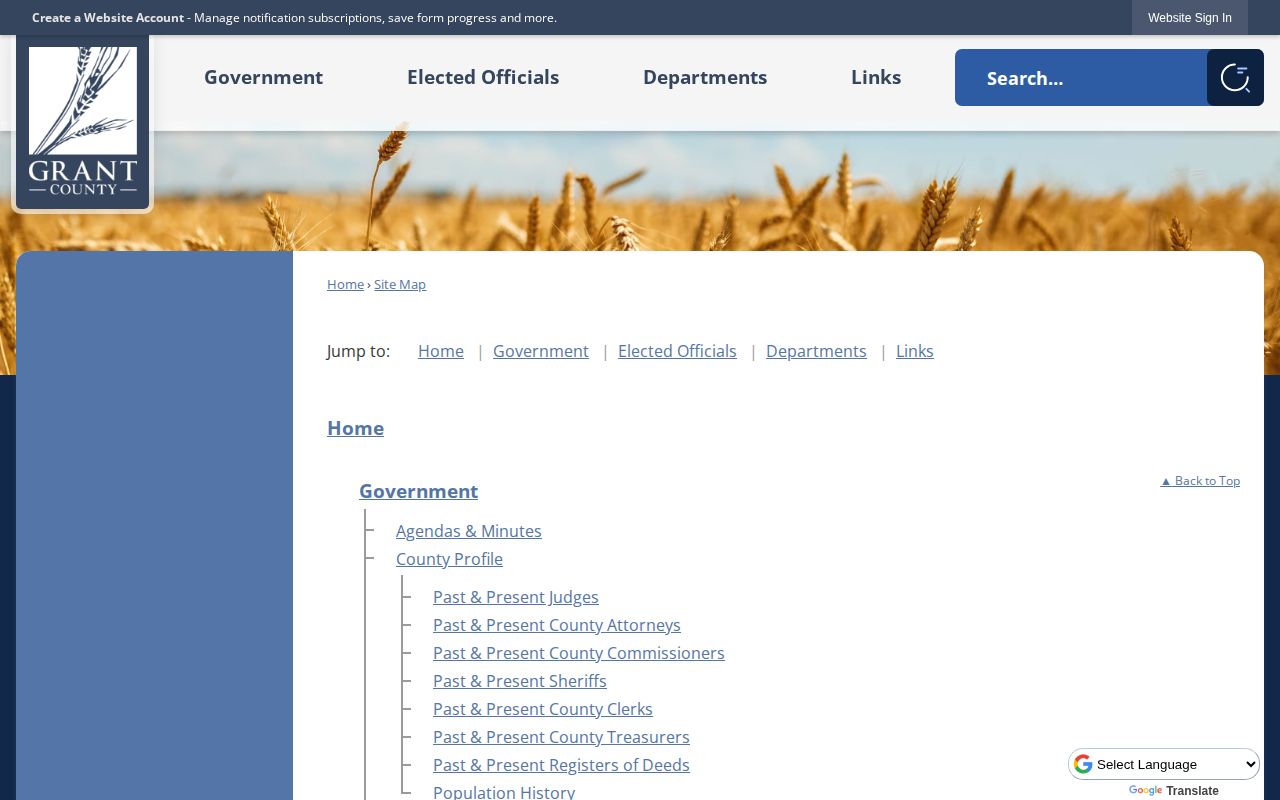
No rolling 72-hour jail release page appears there, so the county record request remains the direct source for a defined three-day span.
Request Grant County Three-Day Releases
Choose exact beginning and ending timestamps before contacting GCSO. A weekend request might begin at midnight Friday and end at midnight Monday, while another inquiry may use three full calendar days. State the time zone if the boundary could matter. Ask for the electronic jail-book fields in the format maintained.
- Write the precise 72-hour start and end times.
- Ask GCSO whether an existing jail-book report or set of entries covers that range.
- Request names, booking numbers, release timestamps, release manners, destinations, and releasing authorities if maintained and releasable.
- Ask for an itemized fee estimate before staff or reproduction charges are incurred.
- Review each result against VINE and the matching Grant County court case.
KORA concerns existing records. It may not require the county to build a custom 72-hour product or calculate a new report. A request framed around maintained fields is more precise and easier for the custodian to evaluate.
Grant County 72-Hour Record Fields
Because there is no web list, the table below describes useful fields to request, not fields displayed on a live screen. Each one serves a distinct task. Identity fields prevent a wrong match, while time, manner, and destination fields explain the local custody exit.
| Requested field | Use in a three-day review |
|---|---|
| Name and booking number | Separates bookings and people with similar names. |
| Admission date and time | Shows which custody stay ended in the range. |
| Release date and time | Places the GCSO exit inside or outside the 72 hours. |
| Manner of release | May distinguish bond, time served, order, or transfer. |
| Destination agency | Identifies continued custody when recorded. |
| Releasing authority | Points to the order or agency behind the event. |
Grant County has not published the exact jail-book schema. Use “if maintained and releasable” in the request. If an investigation field is closed, ask for segregation of the open jail-book parts and a written basis for any withheld material.
Grant County Weekend Release Checks
A three-day span is useful around weekends and holidays because it reduces the risk of checking only one date. It does not solve every delay. Court entries may be indexed after the event, office staff may not answer outside business hours, and an automated VINE update can arrive before or after a person expects it.
No Grant County weekend-release rule, fixed exit time, or family waiting policy was verified. Do not infer one from jail visitation hours. The official visitation page concerns digital visits, not discharge processing. Ask GCSO about a specific event and keep the response tied to that booking.
Note: A wider range catches more dates, but it does not convert an alert or court order into proof of physical release.
Verify Grant County Release Results
A three-day record should be read as a group of individual custody events. Search Kansas VINELink for a specific adult county-jail detainee. If it reports release, transfer, or escape, preserve that exact label. Then ask GCSO for the local entry that gives the manner or destination.
Read the related Grant County court docket for bond, dismissal, sentence, commitment, or transport authority. A bond order can permit release without proving that payment, holds, and jail processing were complete at once. Likewise, a sentence to KDOC can explain why the person left the local jail but did not return to the community.
For one named person rather than a range, use the full Grant County released inmate lookup. It separates county jail records from KASPER, BOP, and ICE sources.
Grant County Release System Boundaries
The source must match the custody system. Kansas VINE covers adult offenders in county jails and does not include KDOC prisons. KASPER covers people sentenced to the Kansas Secretary of Corrections, including specified supervision and discharge records. BOP and ICE use their own federal locators.
| Event | Best verification path |
|---|---|
| Grant County Jail exit | GCSO entry, VINE event, and court authority |
| Transfer to KDOC | GCSO destination followed by KASPER movement |
| Kansas prison release | KASPER current status and movement date |
| Federal prison release | BOP locator and federal docket |
| ICE custody change | ICE locator and originating agency record |
A person can leave one system and enter another. Accurate wording says “released from Grant County Jail” or “transferred to KDOC,” not simply “free.” This distinction is especially important when reviewing multiple events over three days.
Grant County Release Retention Limits
There is no web archive whose lifespan can be tested, because no Grant County release feed was found. Ask GCSO for the retention schedule that applies to jail-book or release entries if an older event matters. A request for three recent days does not establish how long the underlying record will remain available.
Court dockets and KASPER may be more durable, but they answer different questions. A docket records legal acts. KASPER records the state corrections phase. Neither replaces the county’s physical release timestamp or destination entry.
Grant County Three-Day Data Quirks
A name disappearing from a feed cannot be used here because the county provides no public feed to begin with. Even in VINE, no match may result from spelling, timing, a different county, or an older event. The result must be checked against the reporting agency.
Grant County searches also produce false matches from Washington, Arkansas, Indiana, and other states. Look for Kansas, Ulysses, the 620 area code, or the official grantcoks.org domain before relying on a source.
Contact Grant County Release Records
GCSO Records is at 210 E. Central Avenue, Ulysses, KS 67880, with phone 620-356-3500 and fax 620-356-1038. No fixed records hours or standard release-entry price is published. Confirm access before travel.
Grant County FOI OfficerGrant County Courthouse
108 S. Glenn, main level
Ulysses, KS 67880
620-356-1335
Monday through Friday, 8 a.m. to 5 p.m.
The county’s FOI process states that most records are produced within three business days or the requester receives an explanation. The KORA deadline is for a response, not always final production. If access is denied, request the specific legal basis in writing.
Fees may cover actual staff time, review, redaction, and reproduction. K.S.A. 45-219 allows advance payment and permits a requester to seek an itemized statement. Set a cost threshold in the request and ask the office to pause before exceeding it. A short date range and a clear list of fields can reduce uncertainty for both the requester and custodian.
Note: Use the office title for the FOI Officer because Grant County pages conflict on the individual officeholder’s name.
Match Grant County Release Identities
A three-day range can contain more than one booking or people with similar names. Match each record with a booking number, case number, birth information when lawfully available, or another stable identifier. Do not merge records because the name and date look close. Aliases, initials, suffixes, and spelling differences can change search results.
Dates also need labels. An admission time, bond-order date, jail release timestamp, KASPER movement date, and anticipated release date describe different events. Use the GCSO time for the county jail exit. Use the court order to explain authority, and use a destination system’s movement record to confirm continued custody or later release.
If sources conflict, ask the custodian of the disputed fact. GCSO owns its jail entry, the court owns its filed order, and KDOC owns KASPER data. Keep the conflict visible until the source resolves it.
When the event likely occurred today, compare the range with Released Last 24 Hours. Its same-day workflow gives more weight to prompt VINE and phone checks, while this three-day method is built around a bounded records request.